
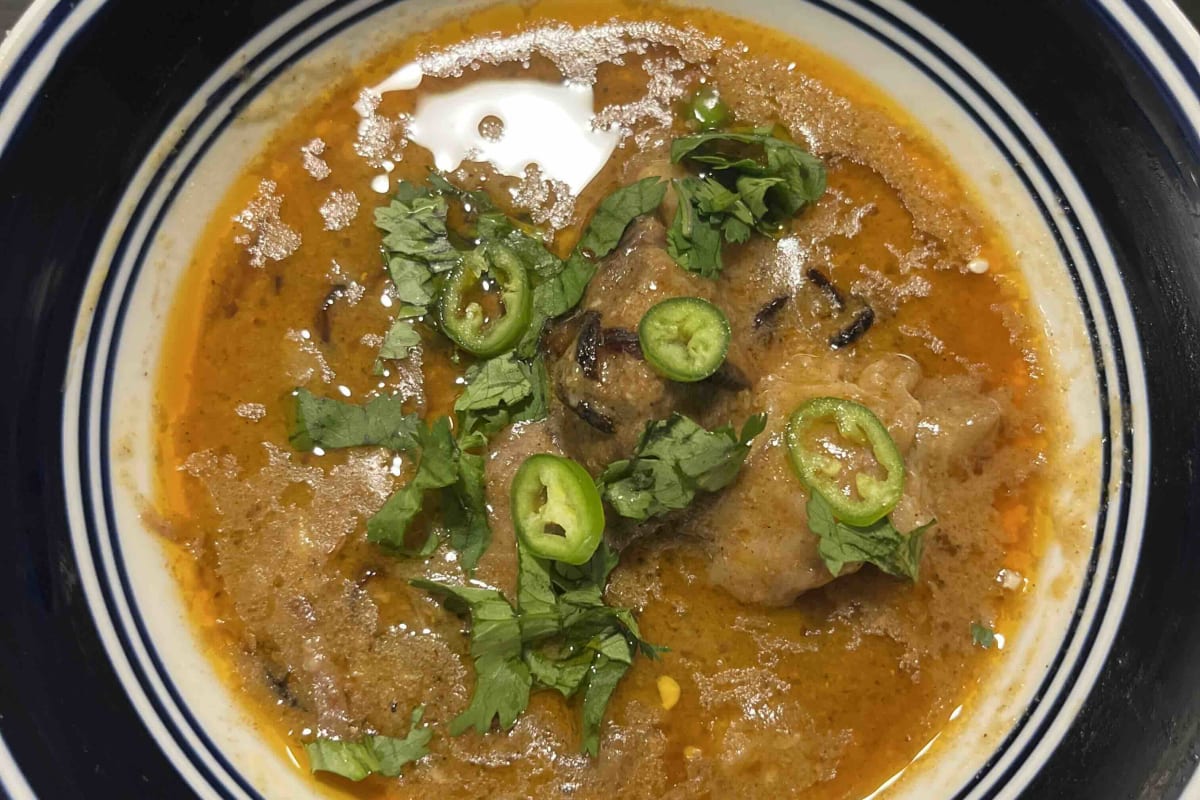
Nehari
A rich, slow-cooked Pakistani beef stew featuring tender beef shank and aromatic whole spices. This traditional Nehari uses a signature Sage Kitchen spice blend.
Instructions
- 1
Prepare the Base
Heat 1/2 - 1/3 cup ghee in a large, heavy-bottomed pot over medium-high heat. Add 1 large onion and fry until golden brown, stirring occasionally.
- 2
Sear the Meat
Add the beef shank and haddi (bone) to the pot. Fry each side until golden browned, turning to ensure even color on all surfaces.
- 3
Add Spices and Bhoonao
Add 3 tbsp lahsan (garlic), 1-1.5 tbsp namak (salt), 2 tbsp laal mirch (red chili powder), and 1/2 tbsp haldi (turmeric). Bhoonao (fry) the spices with the meat for 3-4 minutes, stirring constantly to prevent burning.
- 4
Add Water and Bring to Boil
Add enough water to cover the meat completely. Bring to a full boil on high flame.
- 5
Add Aromatic Spices
Add Khushbu Masala 1 (blend the dried ginger, fennel seeds, cumin, and whole coriander together before adding) and Khushbu Masala 2 (bay leaves) to the pot.
- 6
First Slow Cook
Reduce heat to low and slow cook for 2.5 hours, covered, until the meat is tender.
- 7
Prepare the Atta Mixture
Dry roast 1 cup whole wheat atta in a separate pan on low flame for 5 minutes, stirring constantly to prevent burning. The flour should become fragrant but not browned. Mix the roasted atta with water to form a smooth, lump-free slurry.
- 8
Add Atta for Thickening
While stirring continuously, add the atta mixture to the pot. The oil will temporarily disappear into the gravy — this is normal and expected.
- 9
Add Nehari Masala
Add 3 tbsp of the prepared Nehari Masala (Sage Spice Blend) to the pot and stir well to combine.
- 10
Second Slow Cook
Continue to slow cook for another 1.5 hours on low heat, covered, stirring occasionally.
- 11
Rest on Dum
Turn off the heat and leave the pot covered on dum (resting) for 30 minutes. The oil will rise to the top, creating a glossy finish.
- 12
Serve
Serve hot with luazmaat (traditional garnishes): julienned ginger, sliced green chilies, fresh cilantro, and lemon wedges. Pair with naan or paratha.
Notes
• Beef Cut: Beef shank is the traditional cut for Nehari due to its collagen-rich connective tissue, which creates a rich, gelatinous gravy when slow-cooked. • Pipli (Long Pepper): This ingredient is essential for authentic Nehari flavor. Don't skip it — it adds a unique warmth and complexity that regular black pepper cannot replicate. • Roasting Atta: Always dry roast the flour before adding to avoid a raw flour taste in the final dish. The flour should be fragrant and slightly golden. • Oil Rising: When the oil rises to the top after resting, this indicates the Nehari is properly cooked and emulsified. Don't skim it off — it's a sign of authentic preparation. • Make Ahead: Nehari tastes even better the next day as flavors develop. Store in the refrigerator and reheat gently before serving. • Spice Grinding: For best results, grind the Nehari Masala spices fresh using a spice grinder or mortar and pestle.
You might also like
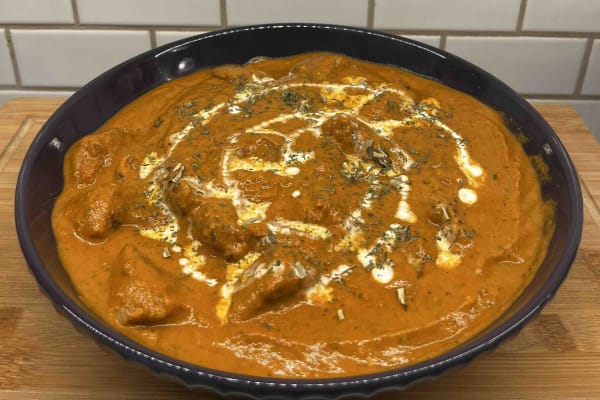
A rich and creamy classic desi curry featuring marinated tandoori chicken in a smooth, spiced tomato and cashew gravy.

A fragrant Pakistani chicken curry served with aromatic whole spice rice, perfect for family gatherings and special occasions
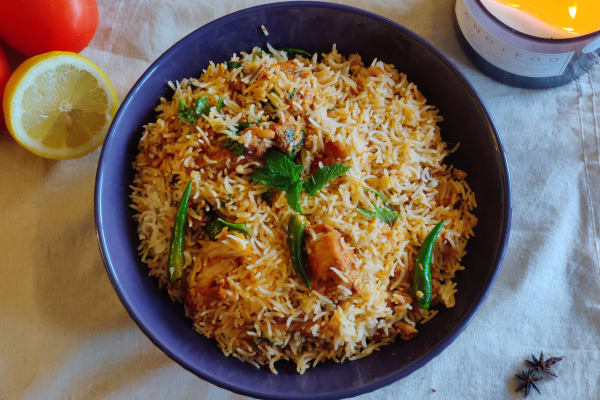
A sage original. Delicious, and one-of-a-kind chicken biryani with perfectly spiced chicken, potatoes, and fragrant basmati rice layered.
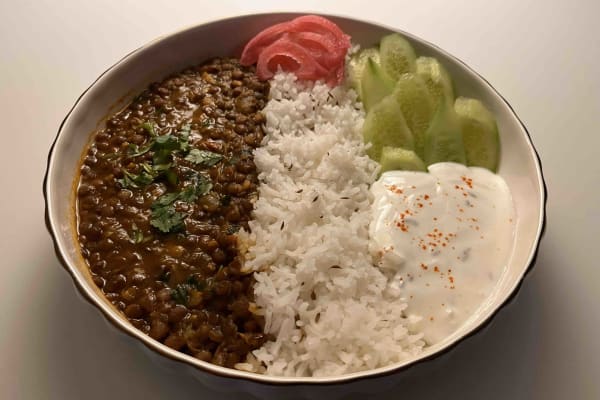
A wholesome, one-pot preparation of whole brown lentils cooked with desi ghee, fresh ginger-garlic, and a bright touch of mint.